The 100 best movies of all time
Silent classics, noir, space operas and everything in betwixt: Somehow we managed to rank the best movies of all fourth dimension


Everyone has their favorites – that's why whatsoever argue over what makes the best movies of all time can take hours (or, in our cases, a lifetime). Tin there ever be one list to rule them all? A canon, every bit critics like to telephone call it, updated with today'due south game changers, that would glance upon all tastes, all genres, all countries, all eras, balancing bear upon with importance, brains with heart? The challenge was daunting. Nosotros just couldn't resist. Our list includes some of the virtually recognized activeness, feminist and foreign films. Please permit united states of america know how wrong we got it.
Written past Abbey Bender, Dave Calhoun, Phil de Semlyen, Bilge Ebiri, Ian Freer, Stephen Garrett, Tomris Laffly, Joshua Rothkopf and Anna Smith
RECOMMENDED:
– The all-time movies on Netflix correct now
– The 100 all-time comedy movies
– The 30 best space odysseys
– The best romantic movies of all time
– The 101 best action movies ever made
– The best documentaries on Netflix
Best movies of all time
1. 2001: A Space Odyssey (1968)
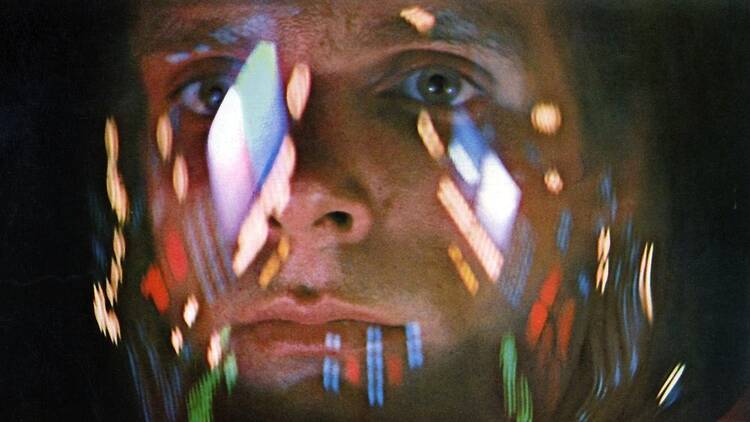
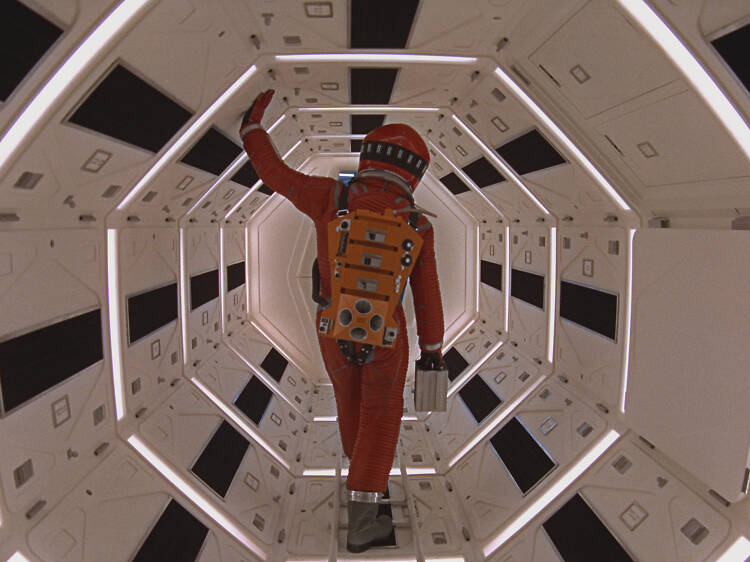
The greatest movie always made began with the meeting of ii bright minds: Stanley Kubrick and sci-fi seer Arthur C Clarke. 'I understand he'due south a nut who lives in a tree in Bharat somewhere,' noted Kubrick when Clarke's proper name came upward – along with those of Isaac Asimov, Robert A Heinlein and Ray Bradbury – as a possible author for his planned sci-fi epic. Clarke was actually living in Ceylon (non in Bharat, or a tree), but the pair met, hit it off, and forged a story of technological progress and disaster (hello, HAL) that'due south steeped in humanity, in all its luminescence, weakness, courage and mad ambition. An audience of stoners, wowed by its eye-candy Star Gate sequence and pioneering visuals, adopted it as a pet movie. Were it not for them, 2001 might have faded into obscurity, but it's hard to imagine it would accept stayed there. Kubrick'southward frighteningly clinical vision of the future – AI and all – however feels prophetic, more than 50 years on.—Phil de Semlyen
two. The Godfather (1972)
From the wise guys of Goodfellas to The Sopranos, all crime dynasties that came after The Godfather are descendants of the Corleones: Francis Ford Coppola's magnum opus is the ultimate patriarch of the Mafia genre. A monumental opening line ("I believe in America") sets the operatic Mario Puzo adaptation in motion, before Coppola'south epic morphs into a chilling dismantling of the American dream. The corruption-soaked story follows a powerful immigrant family unit grappling with the paradoxical values of reign and religion; those moral contradictions are crystallized in a legendary baptism sequence, superbly edited in parallel to the murdering of 4 rivaling dons. With countless iconic details—a horse's severed head, Marlon Brando'due south wheezy voice, Nino Rota's tricky waltz—The Godfather's authorization lives on.—Tomris Laffly

3. Denizen Kane (1941)
Back in the headlines thank you to David Fincher's brilliantly acerbic making-of drama Mank , Citizen Kane ever finds a manner to renew itself for a new generation of flick lovers. For newbies, the journey of its bulldozer of a protagonist – played with inexhaustible force by histrion-director-wunderkind Orson Welles – from unloved kid to thrusting entrepreneur to press baron to populist feels entirely au courant (in unconnected news, Donald Trump came out equally a superfan). You can breast-stroke in the film's groundbreaking techniques, like Gregg Toland'southward deep-focus photography, or the limitless cocky-confidence of its staging and its investigation of American capitalism. Simply information technology'due south also just a damn skilful story that you definitely don't need to exist a hardened cineaste to relish.—Phil de Semlyen
4. Jeanne Dielman, 23, Quai du Commerce, 1080 Bruxelles (1975)
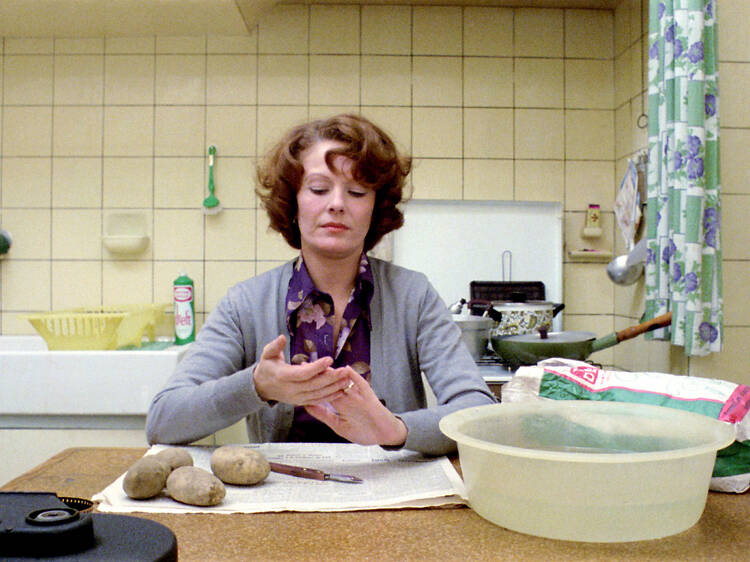
Long considered a feminist masterpiece, Chantal Akerman's quietly ruinous portrait of a widow's daily routine—her chores slowly yielding to a sense of pent-up frustration—should take its rightful place on any all-time list. This is not merely a niche movie, but a window onto a universal condition, depicted in a full-bodied structuralist way. More hypnotic than you may realize, Akerman'due south uninterrupted takes turn the unproblematic acts of dredging veal or cleaning the bathtub into subtle critiques of moviemaking itself. (Pointedly, we never run into the sexual activity work Jeanne schedules in her bedroom to brand ends meet.) Lulling us into her routine, Akerman and histrion Delphine Seyrig create an extraordinary sense of sympathy rarely matched by other movies. Jeanne Dielman represents a total commitment to a woman's life, hr by hour, minute past minute. And it fifty-fifty has a twist ending.—Joshua Rothkopf
five. Raiders of the Lost Ark (1981)
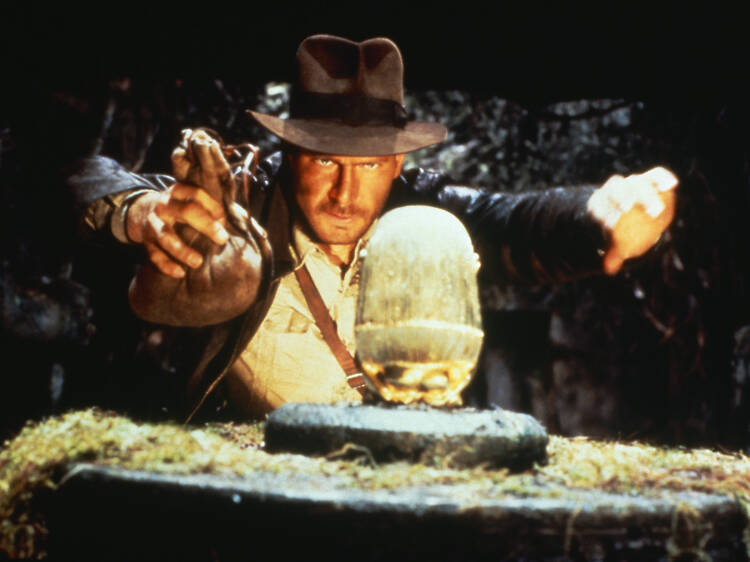
Starting with a dissolve from the Paramount logo and ending in a warehouse inspired by Citizen Kane, Raiders of the Lost Ark celebrates what movies tin do more than joyously than whatsoever other film. Intricately designed as a tribute to the craft, Steven Spielberg'due south funnest blockbuster has it all: rolling boulders, a barroom brawl, a sparky heroine (Karen Allen) who tin can hold her liquor and lose her temper, a treacherous monkey, a champagne-drinking villain (Paul Freeman), snakes ("Why did information technology accept to exist snakes?"), cinema's greatest truck hunt and a barnstorming supernatural finale where heads explode. And information technology'south all topped off by Harrison Ford'south pitch-perfect Indiana Jones, a model of reluctant but resourceful heroism (look at his face when he shoots that swordsman). In short, information technology's cinematic perfection.—Ian Freer
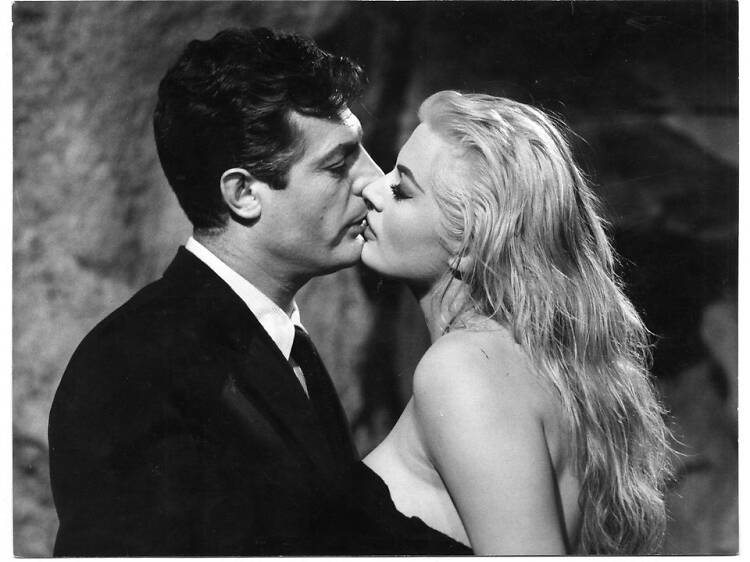
six. La Dolce Vita (1960)
Made in the middle of Italy's smash years, Federico Fellini's runaway box-office hitting came to define heated glamour and celebrity civilisation for the entire planet. Information technology also made Marcello Mastroianni a star; here, he plays a gossip announcer caught up in the frenzied, freewheeling world of Roman nightlife. Ironically, the flick'south portrayal of this milieu as vapid and soul-corrodingly hedonistic appears to have passed many viewers by. Peradventure that'south because Fellini films everything with and then much cinematic verve and wit that it'southward often difficult non to get caught up in the febrile happenings onscreen. So much of how we view fame still dates back to this film; information technology fifty-fifty gave us the discussion paparazzi.—Bilge Ebiri
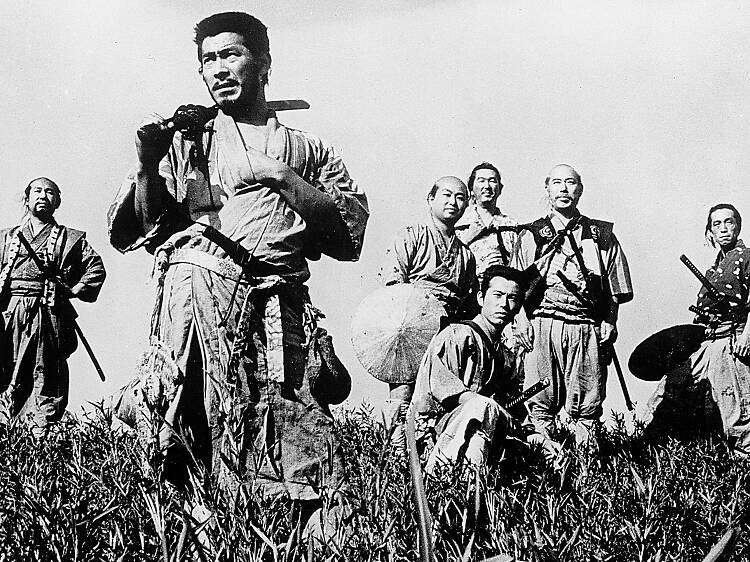
7. Seven Samurai (1954)
It'southward the easiest 207 minutes of cinema y'all'll ever sit through. On the simplest of frameworks—a poor farming community pools its resources to hire samurai to protect them from the brutal bandits who steal its harvest—Akira Kurosawa mounts a finely fatigued epic, by turns absorbing, funny and exciting. Of course the action sequences stir the blood—the last showdown in the rain is unforgettable—only this is really a study in homo strengths and foibles. Toshiro Mifune is superb as the half-crazed self-styled samurai, but it'due south Takashi Shimura's Yoda-similar leader who gives the film its emotional centre. Since replayed in the Wild Westward (The Magnificent Seven), in space (Battle Beyond the Stars) and even with animated insects (A Bug's Life), the original still reigns supreme.—Ian Freer
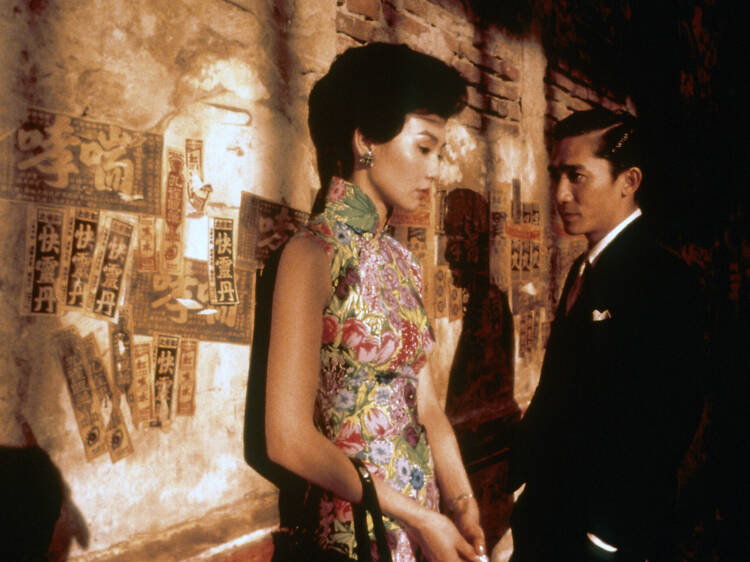
8. In the Mood for Love (2000)
Can a picture show actually be an instant classic? Anyone who watched In The Mood for Love when it was released in 2000 may accept said yep. The second this beloved story opens, yous sense you are in the hands of a master. Wong Kar-wai guides us through the narrow streets and stairs of '60s Hong Kong and into the lives of two neighbors (Maggie Cheung and Tony Leung) who discover their spouses are having an affair. As they imagine—and partly reenact—how their partners might be behaving, they fall for each other while remaining determined to respect their wedding vows. Loaded with longing, the film benefits from no less than three cinematographers, who together create an intense sense of intimacy, while the faultless performances shiver with sexual tension. This is cinema.—Anna Smith
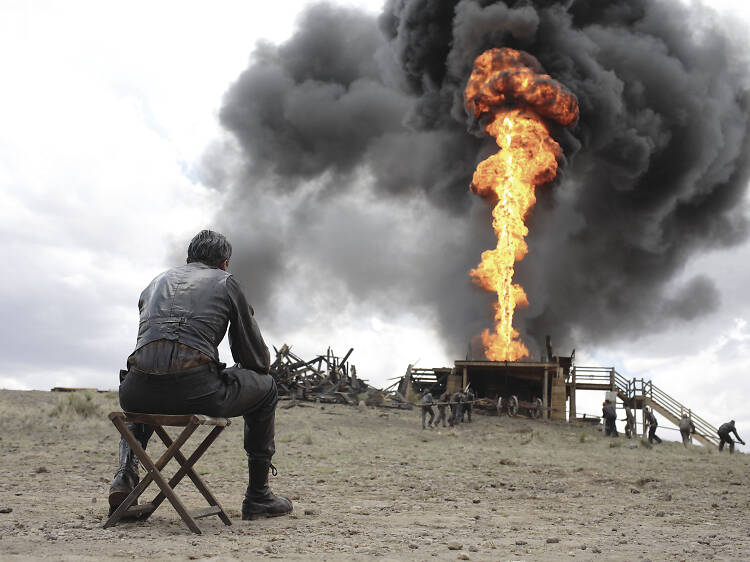
nine. At that place Volition Be Blood (2007)
On the road to becoming the most significant filmmaker of the last 20 years, Paul Thomas Anderson transformed from a Scorsesian chronicler of debauched L.A. life into a hard-nosed investigator of the American confidence man. The pivotal point was There Volition Be Blood, an epic about a sure kind of hustler—the oil baron and prospector. Daniel Plainview is, in the concluding assay, an ultra-scary Daniel Day-Lewis who will drinkable your milk shake. Scored by Radiohead'southward Jonny Greenwood (himself emerging every bit a major composer), Anderson'southward mournful epic is the true heir to Chinatown's bone-deep cynicism. Every bit Phantom Thread makes clear, Anderson hasn't lost his humor, not by a long shot. But there once was a moment when he needed to get serious, and this is it.—Joshua Rothkopf
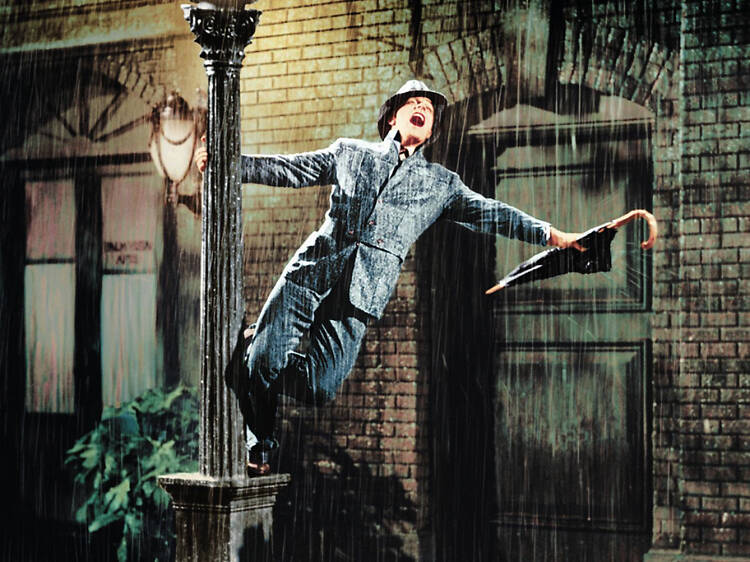
10. Singin' in the Rain (1952)
Forget The Artist—sorry Uggie—and relish instead the sheer, serotonin-enhancing verve of MGM'south glorious epitaph to cinema'southward silent era. Its trio of dancers—safety-faced (and heeled) Donald O'Connor, sparkling newcomer Debbie Reynolds and co-director and headline act Gene Kelly—are a triple threat, nailing the stellar songs, intricate and physically enervating dance routines and selling all the comic beats with consummate skill. Just kudos likewise belongs to Betty Comden and Adolph Dark-green, whose effervescent screenplay provides the vanquish for the spectacle to movement to, and Jessica Hagen, whose frequently-disregarded plough equally cracked silent star Lina Lamont is the movie's funny-lamentable counterpoint. Non forgetting co-director Stanley Donen, who was always happy to let his stars take the credit but deserves an equal share for a musical that never puts a foot incorrect.–Phil de Semlyen
11. Goodfellas (1990)
Three decades on and withal a shot of pure cinematic adrenaline, Martin Scorsese'due south gangster opus is a gloriously-executed epitaph to boyhood heroes who turn out to take feet of dirt and blood-soaked hands. It'south famous for many things – the 300 f-bombs, the iconic Copacabana oner, the umpteen needle-driblet moments, Billy Batts'due south death, Joe Pesci's shirt collars, et al – just if there'south a unmarried reason why it's a favourite with everyone from hardcore cineastes to professional footballers (that, and Scarface ), it's surely the arc of Ray Liotta'south antihero Henry Hill. He goes from starry-eyed kid to aspiring mobster to difficult-bitten wiseguy to coked-up paranoiac in 150 incoherent minutes. Moral corruption is rarely this alluring.—Phil de Semlyen
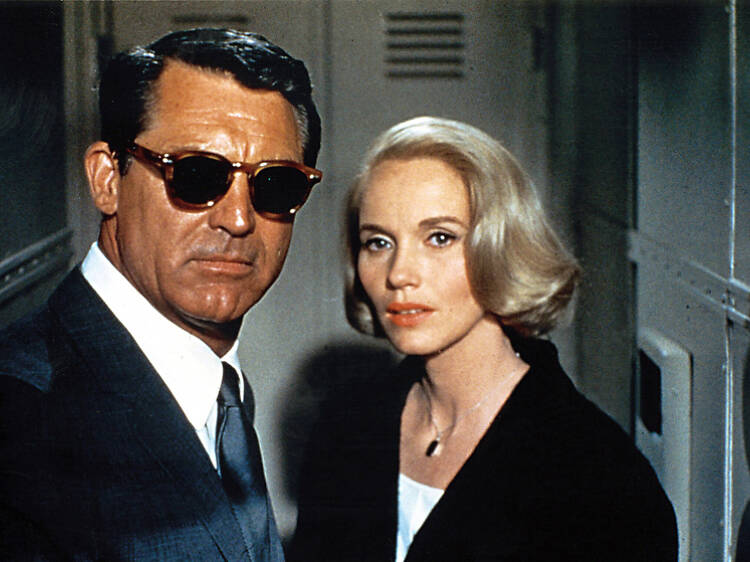
12. Due north past Northwest (1959)
There's no other thriller as elegant, light-touched and sexy as Hitchcock'south silken antic. Cary Grant's suavely hollow adman Roger O. Thornhill ("What does the O. stand for?" "Nothing.") is Don Draper with a sense of humor, which he sorely needs when he contracts a bad case of Wrong Man–itis. The ready pieces, the villains, Eva Marie Saint's femme fatale, Saul Bass's credits, Bernard Herrmann'southward musical cues—somehow the flick manages to exist even more than the sum of its glorious parts. Oh, and somewhere in there, Thornhill fifty-fifty manages to find his soul.—Phil de Semlyen

xiii. Mulholland Drive (2001)
You could watch Mulholland Bulldoze, undoubtedly one of the greatest films of a new century, a hundred times and yet get something dissimilar out of information technology with each revisit. David Lynch'south glamorous nightmare of Los Angeles is dense with mystery, terror and uncanny sexiness—themes that had long been a constant of the auteur's piece of work, but which here reached their lurid apotheosis.—Abbey Bender

14. Wheel Thieves (1948)
Vittorio de Sica'due south Neorealist masterpiece is set in a earth where owning a bicycle is the central to working, but it could simply as easily be set in i where the absence of machine, or affordable childcare, or a abode, or a social security number are insurmountable barriers in the constant slog to put nutrient on the table. That'south what makes simultaneously it a film for postwar Italia and modernistic-solar day anywhere-at-all. That's what makes it such a powerful, indelible landmark in humanist cinema. You tin can feel it in virtually every social drama you care to mention, from Ken Loach to Kelly Reichardt.—Phil de Semlyen
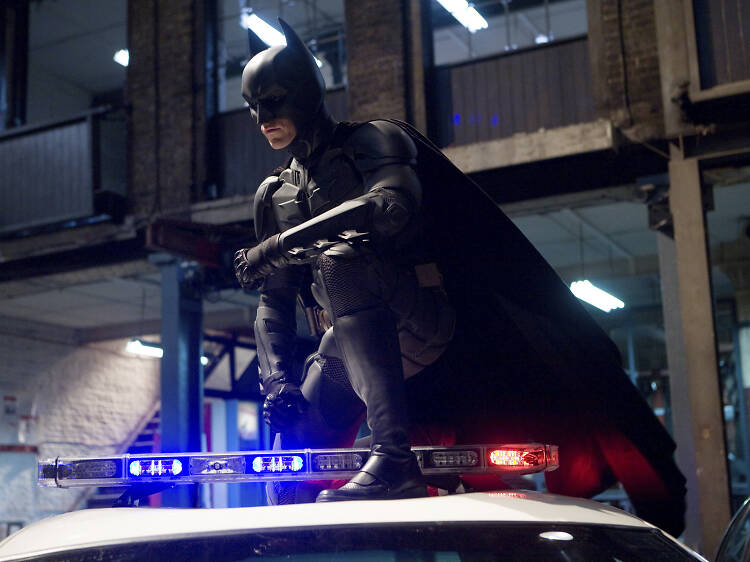
15. The Dark Knight (2008)
In that location's a new Batman in Gotham, in the shadowy grade of Matt Reeves'south The Batman – and this is the bar it has to clear. The middle entry in Christopher Nolan's Bat-trilogy is an almost flawless case report of how to do a sophisticated superhero epic for modern audiences – and the 'almost' is only because the final human activity refreshingly tries to cram in almost too many ideas, much moral arithmetic. Heath Ledger's Joker, meanwhile, redefines large-screen villainy: It's not enough to be sinister, you need a party fob now too.—Phil de Semlyen

sixteen. City Lights (1931)
Charlie Chaplin's total vision remains awe-inspiring: He wrote, directed, produced, edited and starred in his own movies, which he besides scored with an orchestra. And when those cameras were rolling, they captured a self-made icon with a global audience. Withal, City Lights was something else. Chaplin, reticent to give up the visual techniques he'd mastered, insisted on making his new comedy a silent picture show even as viewers were growing thirsty for sound. Every bit ever, the star had the last express joy: Not only was the film a huge commercial success, it also ended on the most heartbreaking close-upwardly in picture palace history—the peak of the reaction shot (since cribbed past movies from La Strada to The Purple Rose of Cairo), no dialogue required.—Joshua Rothkopf

17. Grand Illusion (1937)
In that location'south never a bad time to revisit ane of Jean Renoir'southward great masterpieces (forth with The Rules of the Game), but this current era of populists, nationalists and shouty rabble-rousers feels like a specially practiced one. Set up in a German language Pow camp during WWI, the moving-picture show lays bare the fault lines of form and nationality among a group of French prisoners and their German captors and comes to the decision that all that really matters is man's dignity toward his swain man.—Phil de Semlyen

eighteen. His Daughter Friday (1940)
Calling this i the peak of screwball one-act may be too limiting: Among the many topflight movies directed by journeyman filmmaker Howard Hawks, His Girl Fri is his most romantic and virtually verbose (the abiding barrack feels like foreplay). Though the breviloquent Hawks would downplay his own proto-feminism throughout his life, the film is also his most liberated; strong women who had jobs and ran with newshounds were merely what he wanted to see. Most wonderfully, this one-act all-time celebrates the rule of wit: He—or, more frequently, she—with the sharpest tongue wins. If y'all love words, you'll dear this movie.—Joshua Rothkopf

xix. The Red Shoes (1948)
You could stick virtually every Powell and Pressburger film on this list; such was the dynamic duo's stellar output. Just for our coin—and that of superfan Martin Scorsese—this dazzling ballet-set romance is kickoff amid equals. Information technology's a perfect expression of artists' drive to create, ready in a lush Technicolor world shot past the neat Jack Cardiff. Scorsese describes it equally "the moving picture that plays in my heart." We'll take 2 seats at the dorsum.—Phil de Semlyen
xx. Vertigo (1958)
A sexy Freudian mind-bender that's ofttimes considered Alfred Hitchcock'south finest triumph, Vertigo is pitched in a globe of existential obsession and cunning doubles. Shape-shifting her style through Edith Head'southward transformational costumes, Kim Novak haunts in two roles: Madeleine Elster and Judy Barton, both objects of desire for James Stewart's curious ex-cop. Completing this bright psychodrama is Bernard Herrmann'southward alarmingly duplicitous score, which twists its fashion to a towering finale.—Tomris Laffly
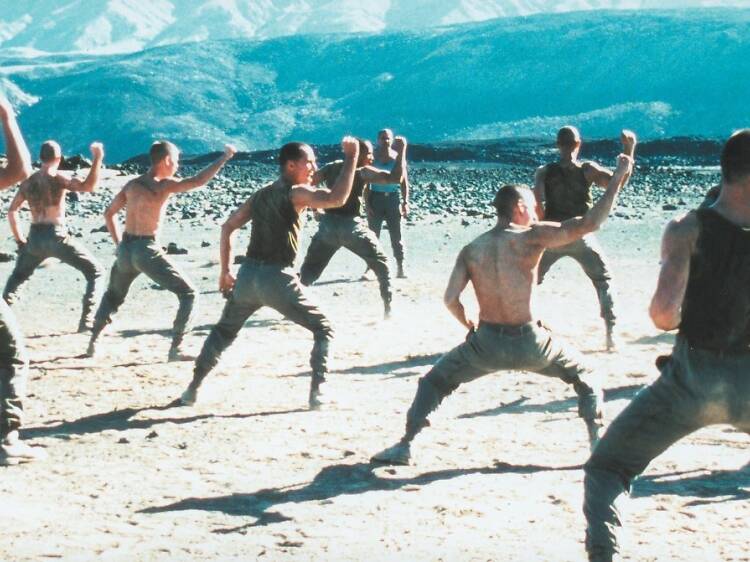
21. Beau Travail (1999)
Increasingly a giant of globe movie theater, France's Claire Denis continues to confound expectations, making movies in sync with her own offbeat rhythms and thematic preoccupations (colonialism, ability, repressed attraction). This ane, her celebrated breakout, is something of a spin on Herman Melville'south Billy Budd—only that's like calling Jaws something of a spin on Moby-Dick. The genius is in Denis'due south technique, manifesting itself in images of shattering emotional precision: sinewy silhouettes of soldiers, abstract tests of will in the desert and, most ravishingly, the euphoria of breaking into trip the light fantastic toe, courtesy of a loose-limbed Denis Lavant and Corona'due south 'Rhythm of the Night'.—Joshua Rothkopf

22. The Searchers (1956)
Showing some personal growth too as filmmaking craft, John Ford makes some amends for his appearance in DW Griffith's virulently racist The Birth of a Nation with this landmark western. It's a story of hatred slowing giving way to compassion that strips away the toxic myths of the former frontier via the swaggering but cleaved-down figure of Ethan Edwards (John Wayne). Edwards is no white-hatted Shane blazon, merely an embittered war veteran who hunts his own niece (Natalie Wood) with the intention of killing her for the crime of take been alloyed with the Comanche. The shot of Edwards framed in that doorway is one of the virtually famous – and most mimicked – in movie theatre.—Phil de Semlyen
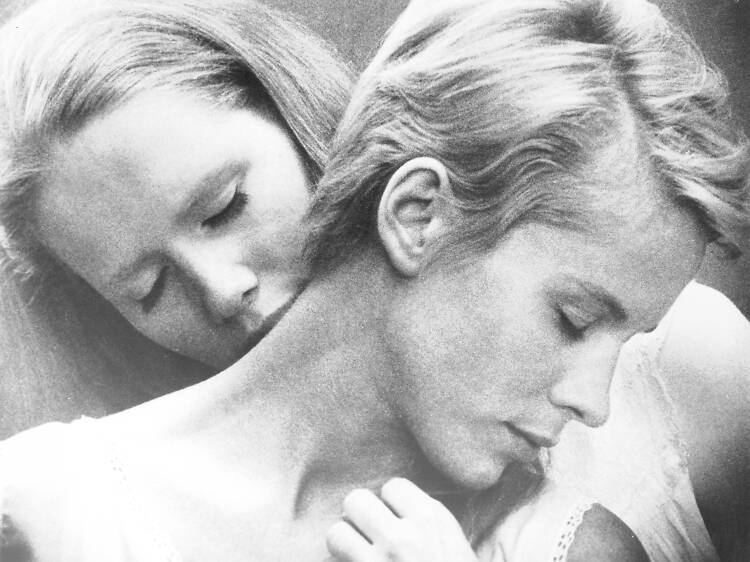
23. Persona (1966)
Ingmar Bergman'southward psychologically raw output has the potency to turn mere motion picture fans into raging addicts; Persona is the hard stuff, a double-sided psychodrama that somehow feels similar it was shot last weekend with two of Ingy's coolest friends (Bibi Andersson and Liv Ullmann, both revelatory). For its intimacy and economy alone, the flick feels like a preview of the scrappy decade to come. Bergman, recovering from a serious bout of pneumonia, wrote the script in the hospital, grappling with a crunch of purpose that he turned into fine art of the highest caliber.—Joshua Rothkopf
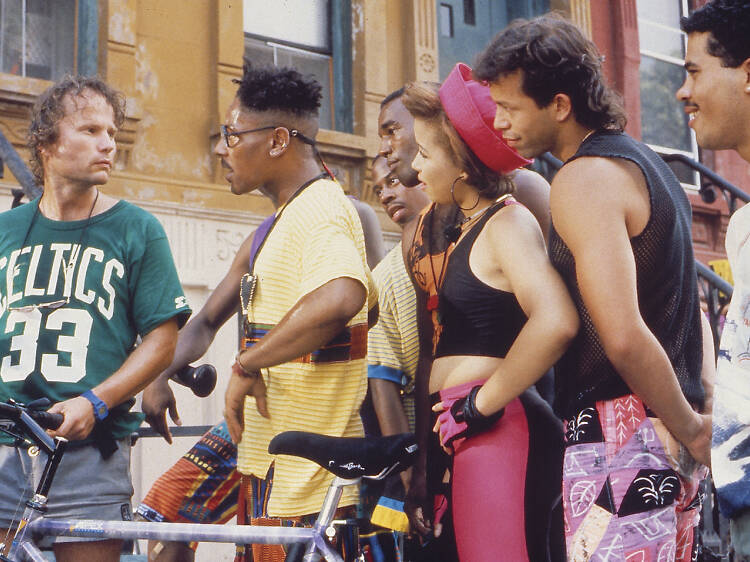
24. Do the Right Thing (1989)
Fasten Lee's bitterly funny, ultimately tragic fresco of a Brooklyn neighborhood during one sweltering summer day was hugely controversial at the time: Critics dinged Lee for his depiction of an uprising in the wake of a police killing. The motion-picture show has lost none of its relevance or power; if anything, it's gained some. But the filmmaking is what makes this a classic, particularly the energy, wit and style with which Lee presents this microcosm and the social forces at play within it.—Bilge Ebiri

25. Rashomon (1950)
It's no exaggeration to say that Akira Kurosawa's Rashomon redefined cinematic storytelling. With its shifting, unreliable narrative structure—in which four people give differing accounts of a murder—the moving-picture show is remarkably daring and serves equally a reminder of how form itself can beguile us. Flashbacks take never been then thrillingly deployed; near 70 years after its release, filmmakers are notwithstanding trying to grab up to its achievements.—Abbey Bender

26. The Rules of the Game (1939)
Jean Renoir cemented his virtuosity with this pitch-perfect report of social-strata eruptions amidst the ditzy, idle rich, most to be blown sideways past WWII. Affairs among aristocrats and servants akin blossom during a weeklong hunting trip at a country estate, where the simply criminal offense is to trade frivolity with sincerity. Renoir captures his sparklingly astute ensemble cast with fluid, deep-focus camera movements, innovations that inspired directors from Orson Welles to Robert Altman.—Stephen Garre tt
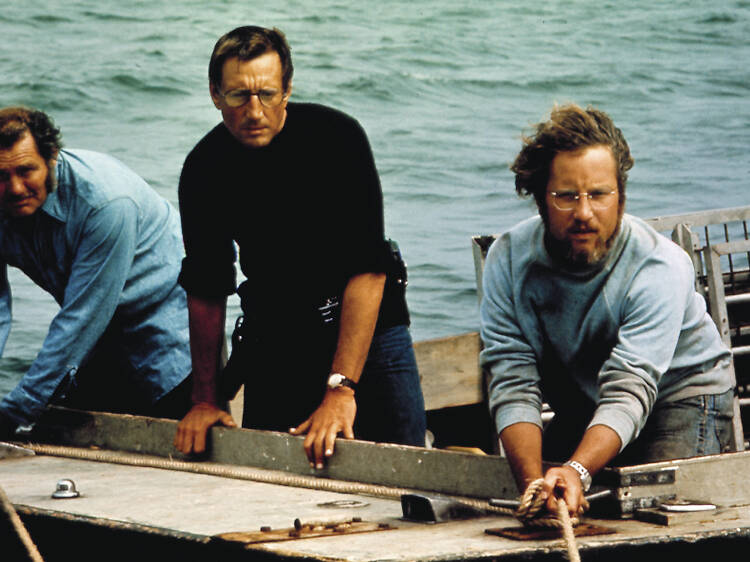
27. Jaws (1975)
Rightly considered i of the almost focused and suspenseful movies ever made, Steven Spielberg's tale of a shark terrorizing a beach town remains effective more than iv decades later. Jaws may have set the reputation of those greyness-finned creatures dorsum a few centuries, but information technology took the popular moving picture thriller to some other level, demonstrating that B-picture material could be executed with masterly skill. Spielberg proved that less is more when it comes to crafting a feeling of dread, barely even showing us the beast that went on to haunt a whole generation.—Dave Calhoun

28. Double Indemnity (1944)
The deliciously dark, fashionable genre of film noir but wouldn't exist without Double Indemnity. This one truly has information technology all: flashbacks, murder, shadows and cigarettes galore, and, of course, a devious femme fatale (Barbara Stanwyck). As i of the groovy directors of Hollywood's golden historic period, Baton Wilder excelled across a diversity of cinematic types, but this hard-boiled gem is his virtually influential work.—Abbey Bender

29. The 400 Blows (1959)
The start in a 5-picture autobiographical series, Francois Truffaut's The 400 Blows is the story of Antoine Doinel (Jean-Pierre Léaud)—stuck in an unhappy home life simply finding solace in goofing off, smoking and hanging with his friends—and information technology'due south cinema's greatest evocation of a troubled childhood. Plus, it's the perfect primer to go kids into subtitled movies.—Ian Freer
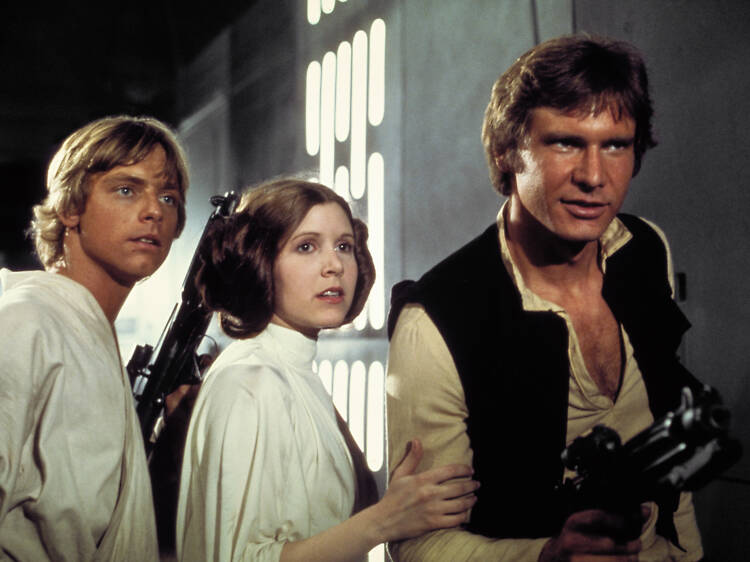
30. Star Wars (1977)
Popcorn pictures hit hyperdrive later George Lucas unveiled his intergalactic Western, an intoxicating gee-whiz infinite opera with dollops of Joseph Campbell–style mythologizing that obliterated the moral complexities of 1970s Hollywood. This postmodern picture show-brat pastiche references a virtual syllabus of genre classics, from Metropolis and Triumph of the Will to Kurosawa's samurai actioners, Wink Gordon serials and WWII thrillers like The Dam Busters. Luke Skywalker's quest to rescue a princess instantly elevated B-movie bliss to billion-dollar-franchise sagas.—Stephen Garrett

31. The Passion of Joan of Arc (1928)
Carl Theodor Dreyer's classic tale of the trial of Joan of Arc is somehow both austere and maximalist. The director shows restraint with setting and scope; the motion-picture show focuses largely on the back-and-forth betwixt Joan and her inquisitors. But the intense close-ups give gratis reign to Maria Falconetti'southward marvelously expressive turn as the doomed Maid of Orleans. Fabricated at the close of the silent era, it fix new standards in screen interim.—Bilge Ebiri
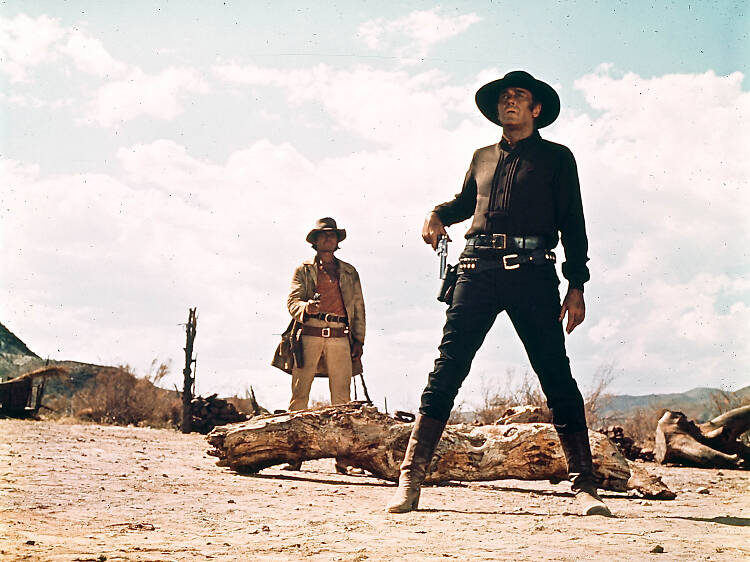
32. Once Upon a Fourth dimension in the West (1968)
The ultimate cult movie, Leone'southward spaghetti Western is set in a civilizing America—though by and large shot in Rome and Espana—but the real location is an abstract borderland of one-time versus new, of larger-than-life heroes fading into memory. Information technology's a triumph of buried political commentary and purest epic cinema. Henry Fonda's icy stare, composer Ennio Morricone's twangy guitars of doom and the monumental Charles Bronson as the terminal gunfighter ("an ancient race…") are just 3 reasons of a million to saddle up .—Joshua Rothkopf

33. Conflicting (1979)
If all it did was to launch a franchise centered on Sigourney Weaver's trigger-happy survivor (still among the toughest action heroines of cinema), Ridley Scott's claustrophobic, deliberately paced sci-fi-horror classic would still exist cemented in the film catechism. But Alien claims masterpiece condition with its subversive gender politics (this is a movie that impregnates men), its shocking chestburster centerpiece and industrial designer H.R. Giger's strangely elegant double-jawed creature, a nightmarish vision of hostility—and one of cinema's most unforgettable pieces of pure craft.—Tomris Laffly

34. Tokyo Story (1951)
Simply spun, Yasujiro Ozu'due south domestic drama is pocket-size but perfectly formed. Chishu Ryu and Chieko Higashiyama are dignified and moving every bit parents who visit their children and grandchildren, only to be neglected. Delicately played, beautifully shot (often with the photographic camera hovering just off the ground), Ozu's masterpiece is the family moving-picture show given grandeur and intimacy. If you lot loved last yr'south Shoplifters, you'll love this.—Ian Freer

35. Pulp Fiction (1994)
What's the best function of Pulp Fiction? The twist contest at Jack Rabbit Slim'south? Bruce Willis versus the Gimp? Jules'due south Ezekiel 25:17 monologue? Quentin Tarantino's moving picture earns marvel with its grabby movie moments but claims all-time status with its spellbinding achronological plotting, insanely quotable dialogue and a proper agreement of the metric organisation. Lurid Fiction marked its generation every bit deeply every bit did Star Wars earlier information technology; it's a flourish of '90s indie attitude that still feels fresh despite a legion of chatty imitators.—Ian Freer

36. The Truman Show (1998)
The late '90s spawned two prescient satires of reality Tv, back when it was however in its pre-epidemic stage: the underrated EDtv and, this, Peter Weir'southward profound statement on the way the media has its claws in u.s.. In some ways a kinder, gentler version of Network, The Truman Testify is a TV parable in which a meek hero (Jim Carrey) wins dorsum his life. It can also exist considered an angrier film, slamming both the controlling TV networks (represented by Ed Harris's messiahlike Christof) and u.s.a., the viewing public, for making a game bear witness of other people's lives.—Phil de Semlyen
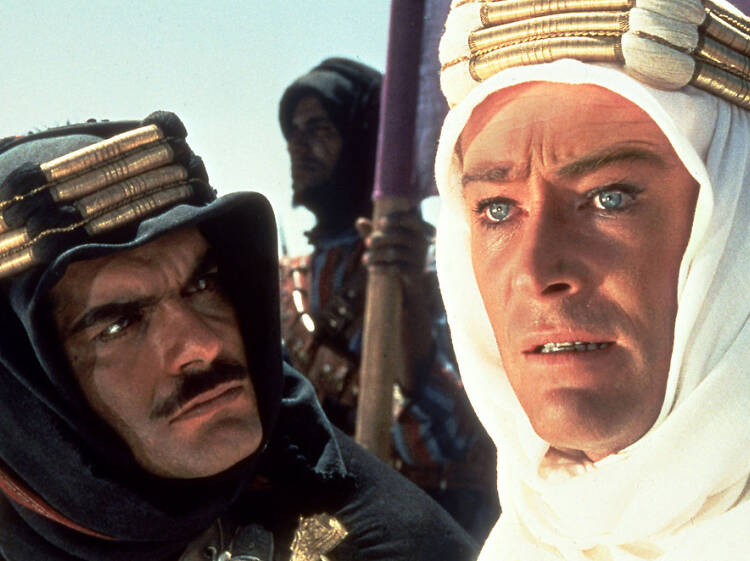
37. Lawrence of Arabia (1962)
Notions of masculinity, conflicted sexuality and tribal identity (or lack of it) boil below the surface of David Lean's historical ballsy similar magma. They seeps through the cracks of its depiction of iconoclastic Edwardian nomad and Arab leader T Eastward Lawrence (Peter O'Toole), locating its huge set pieces within the megalomaniac compass of its hero and lending depth to its intimate moments when the cost of all is laid blank. Amid its sweeping Arabian landscapes, famously captured by cinematographer Freddie Young's cameras, information technology's the interior landscape of Lawrence himself that this great biopic maps out then memorably.—Phil de Semlyen

38. Psycho (1960)
Fun fact: Psycho is the first film to ever depict a toilet flushing. Happily, Alfred Hitchcock'due south thriller broke new ground in other means, too, from offing its heroine within the showtime 3rd to diving deeper into a crazed mind (bravo, Anthony Perkins) than Hollywood had yet managed before. Forget the shower shenanigans, the end is creepy AF.—Ian Freer
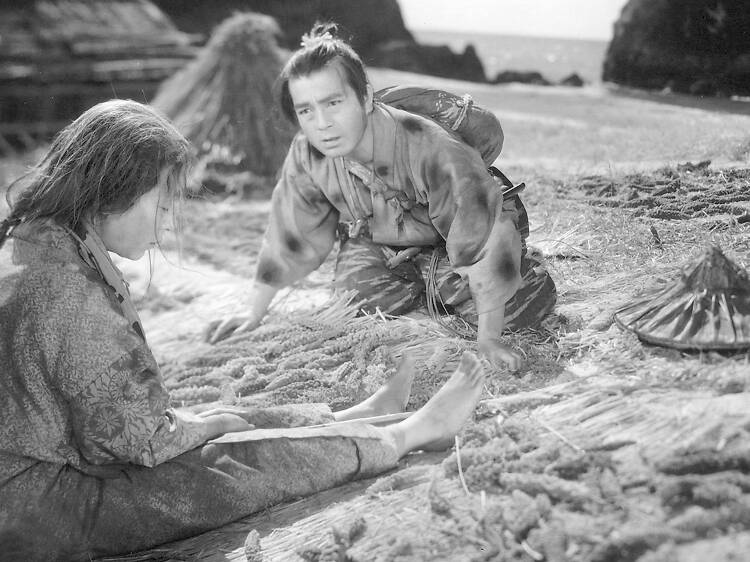
39. Sansho the Bailiff (1954)
Japanese picture palace has produced no shortage of heavy hitters, but director Kenji Mizoguchi may deserve prime of place. He was able to turn out impeccable ghost stories (Ugetsu) and backstage dramas (The Story of the Last Chrysanthemums), just his greatest trait was a deep, unshakable empathy for women, beaten down past the patriarchy but heartbreaking in their suffering. These women are fundamental to Sansho the Bailiff, a feudal tale of familial dissolution that will wreck yous. Brand no apologies for your tears; anybody else will be crying, too.—Joshua Rothkopf

40. Andrei Rublev (1966)
Mournful, challenging and mesmerizing, Soviet manager Andrei Tarkovsky's epic portrait of the life and times of one of Russia's most famous medieval icon painters foregrounds qualities such as landscape and mood over story and character. Ultimately, it's the tale of a man's effort to overcome his crisis of religion in a world that seems to take an endless supply of violence and strife—and it's a remarkable testament to the persistence of artists working under oppressive regimes.—Bilge Ebiri

41. The Umbrellas of Cherbourg (1964)
The melancholy of Michel Legrand's glorious score washes over viewers' hearts from the first moment of Jacques Demy'south nontraditional, sung-through musical. 1 of the about romantic films ever fabricated virtually the pains and purity of first love, the immaculately styled The Umbrellas of Cherbourg challenged the lighter Hollywood musicals of the era (like The Sound of Music and My Fair Lady) and launched the sensational Catherine Deneuve into international distinction. Later, it would be a major influence on La La Country.—Tomris Laffly

42. Chinatown (1974)
Managing director Roman Polanski and screenwriter Robert Towne took a modestly sleazy noir setup and turned it into a meditation on the horrors of American history and rapacious commercialism. The film also sports a perfect cast, with a height-of-his-game Jack Nicholson as a cynical private eye, an impossibly alluring Faye Dunaway as the femme fatale with a by so dark her final revelation still shocks, and the legendary John Huston as the monstrous millionaire at the heart of it all.—Bilge Ebiri

43. The 7th Seal (1957)
Not just any film gets homaged past Bill and Ted. But Ingmar Bergman'due south swell treatise on mortality isn't just any moving-picture show. Despite becoming somehow synonymous with "difficult fine art-house argument," it's not all weighty themes, plague-strewn landscapes and chess games with the Grim Reaper. As Max von Sydow's medieval knight travels the land witnessing the apocalypse, loads of life-affirming moments lighten the load. Of form, it'southward a piece of work of profound philosophical idea, likewise, so you'll feel brainier for having seen it.—Phil de Semlyen

44. Lost in Translation (2003)
Worlds collide in Sofia Coppola's pitch-perfect tale of a moving-picture show star (Neb Murray) and a newlywed (Scarlett Johansson) in Tokyo. Coppola approaches each of her characters with a warmth and sensitivity that exudes from the screen—and ensures that "Contumely in Pocket" volition remain a karaoke favorite around the world (pinkish wig optional). Why has the film endured so vividly in viewers' hearts? Maybe because it captures those gloriously melancholic moments nosotros've all experienced that seem to exist gone in a flash, nevertheless linger forever.—Anna Smith

45. Taxi Driver (1976)
A time capsule of a vanished New York and a portrait of twisted masculinity that still stings, Taxi Driver stands at the peak of the vital, gritty auteur-driven filmmaking that defined 1970s New Hollywood. Martin Scorsese'due south vision of vigilantism is filled with an uncomfortable ambient, and Paul Schrader's screenplay probes philosophical depths that are brought to cruel life by Robert De Niro's unforgettable performance.—Abbey Bender

46. Spirited Away (2001)
The jewel in Japanese blitheness studio Studio Ghibli's crown, Spirited Away is a glorious bedtime story filled with soot sprites, monsters and phantasms—it'southward a movie with the power to coax out the inner child in the nigh grown-up and jaded among us. A spin on Alice'southward Adventures in Wonderland (with the same invitation to follow your imagination), Spirited Away has been ushering audiences into its dream earth for almost two decades and seems only to grow in stature each yr, a tribute to its mitt-fatigued artistry. Trivia time: Information technology remains Nippon's highest-grossing film ever, just ahead of Titanic.—Anna Smith

47. Night of the Living Dead (1968)
The beginning no-budget horror movie to go a bona-fide calling bill of fare for its director, George A. Romero'southward seminal frightfest begins with a single zombie in a graveyard and builds to an undead army attacking a secluded house. Well-nigh modern horror clichés offset here. Only nothing betters it for style, mordant wit, racial and political undertow, and scaring the bejesus out of you, all some 50 years before Us.—Ian Freer

48. Battleship Potemkin (1925)
This rousing Russian silent film was conceived in the heat of Soviet propaganda and commissioned past the still-young Communist government to salute an result from 20 years before. It tells of a sailors' revolt that morphs into a full-blown workers' uprising in the city of Odessa; the movie is most famous for one scenic sequence—much copied and parodied since—of a baby carriage tumbling downward a huge flight of steps. Only Battleship Potemkin is total of powerful images and heady ideas, and managing director Sergei Eisenstein is rightly considered one of the pioneers of early film language, with his influence felt through the decades.—Dave Calhoun

49. Modern Times (1936)
The just Charlie Chaplin flick to run across the Little Tramp go along a massive cocaine rampage, this relentlessly inventive silent classic hardly needs the added kick. The gags come up nearly as fast as you can procedure them, with the typically pinpoint Chaplin slapstick conjured here from scenarios that seem purpose-congenital to end in disaster. The sight of Chaplin literally feeding himself into a massive machine offers a still-germane satire on technological advancement.—Phil de Semlyen

fifty. Breathless (1960)
Film critic Jean-Luc Godard's seismic directing debut is a blowing deconstruction of the gangster picture that also reinvented moviemaking itself. It features Cubistic spring cuts, restless handheld camerawork, location shoots, eccentric pacing (the 24-minute centerpiece is two lovers talking in a chamber), and cocky-conscious asides nearly painting, poetry, popular culture, literature and film. A sexy fling between fiddling thief Jean-Paul Belmondo and Sorbonne-bound gamine Jean Seberg morphs into an oddly touching, existential meditation. It'south pulp fiction, but alchemically profound.—Stephen Garrett

51. Dr. Strangelove or: How I Learned to Stop Worrying and Love the Bomb (1964)
So much of Stanley Kubrick's genius was conceptual, and this 1 asks his most audacious question: What if the world came to an cease—and it was hilarious? Nuclear anything was a field of study in which Kubrick immersed himself, reading virtually every unclassified text. His conclusion was grim: At that place would be no winning. Via darkest comedy (the simply manner into the subject) and an unhinged Peter Sellers playing three dissever parts, Kubrick made his point.—Joshua Rothkopf

52. Yard (1931)
Ane of those epochal films—there's simply a handful—that sits on the separate between silent cinema and the audio era but taps into the virtues of both, Fritz Lang's serial-killer thriller burns with deep-etched visual darkness while perking ears with its whistled "In the Hall of the Mountain King" (performed by a bag-lipped Lang himself; his star, Peter Lorre, couldn't whistle). The movie's theme is vigilance: Nosotros must protect our children, merely who will protect social club from itself? Yard is like a sonar listening to a pre-Nazi Federal republic of germany on the cusp of shedding its humanity.—Joshua Rothkopf

53. Blade Runner
Set in (eek!) 2019, Ridley Scott's vision of a dystopian hereafter is one of the virtually stylish sci-fi films of all fourth dimension. With a noir-inspired artful and a haunting synth score by Vangelis (a massive influence on Prince), Blade Runner is iconic not but for its era-defining wait, but besides for its deeper philosophical exam of what it ways to be human. Many have tried to imitate the picture show's uncanny vibe, but these rain-slicked streets and seedy vistas possess a singular menace.—Abbey Bender

54. The Bitter Tears of Petra von Kant (1972)
The creative fecundity of Rainer Werner Fassbinder, dead from an overdose at age 37 after completing more than forty features, deserves enshrinement by a new generation. This flick is arguably his sharpest and nigh psychologically circuitous; inarguably, it's his bitchiest. There is so much to dear in Fassbinder's shag-carpeted showdown, which goes beyond the spectacle of 2 dueling fashionistas into a profound exploration of aging and obsolescence.—Joshua Rothkopf

55. Rome, Open City (1945)
Few film movements can boast the hit rate of Italian neorealism, a mail service-WWII moving ridge defended to working-grade struggle that seems to incorporate but masterpieces. Robert Rossellini was responsible for a few of them, including Deutschland Twelvemonth Cypher and this earlier drama of repression and resistance, which boasts non one just 2 of the most memorable death scenes in all of cinema.—Phil de Semlyen

56. Nosferatu (1922)
Caryatid for the land of phantoms and the call of the Bird of Death: Ane of the earliest (though unauthorized) adaptations of Dracula is still the most terrifying. Max Schreck's insectlike performance every bit the bloodthirsty Count Orlok is just as transfixing and repulsive as it was about a century ago. German Expressionist director F.W. Murnau'south haunting images of a crepuscular earth set the spooky standard for generations of cinematic nightmares.—Stephen Garrett

57. Airplane! (1980)
With about half-dozen,500 zingers to cull from, anybody has their favorite Plane! gag. Directors David and Jerry Zucker and their partner in extreme silliness, Jim Abrahams, truly threw the kitchen sink at this boundless spoof of the '70s disaster movies that were all the rage at the time. Onscreen one-act, in turn, was modernized for what would exist its most transforming decade. Our favorite joke? "Looks like I picked the wrong calendar week to quit amphetamines."—Phil de Semlyen

58. Under the Skin (2013)
Hypnotic, bewitching, thought-provoking, agonizing, horrifying: Withal you react to information technology, you won't forget Jonathan Glazer's startling adaptation of Michel Faber'south adult female-who-savage-to-earth novel. Using her celebrity in a radical manner, Scarlett Johansson is perfectly bandage as an alien in human course who roams Glasgow trying to option up men in her van. Information technology was shot guerrilla-manner on the streets of the Scottish city, so wait out for the footage of genuinely baffled passersby.—Anna Smith
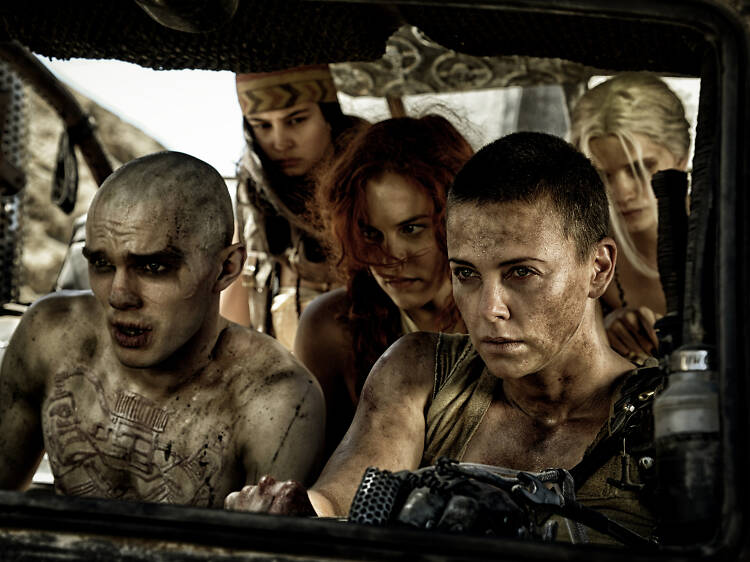
59. Mad Max: Fury Road (2015)
Both a sequel and a reboot, the fourth entry in manager George Miller's series of post-apocalyptic gearhead epics fuses decease-defying stunts with modernistic special furnishings to give usa one of the all-fourth dimension-great action movies. This one is a nonstop barrage of chases, each more spectacularly elaborate and nightmarish than the final—but it's all combined with Miller'southward surreal, poetic sensibility, which sends it into the realm of fine art.—Bilge Ebiri

lx. Apocalypse Now (1979)
Francis Ford Coppola'southward evergreen Vietnam War archetype proves war is neat, as assassinator Martin Sheen heads upriver to kill renegade colonel Marlon Brando. En route, there'south surfing, a thrilling helicopter raid, napalm smelling, tigers and Playboy bunnies, until Sheen steps off the boat and into a unlike zone of madness—or is it genius? Who knows at this point?—Ian Freer

61. Brokeback Mountain (2005)
Forget what the Oscars crowned every bit the All-time Picture of 2005: Ang Lee'due south tragic gay romance is the nominee that stands the test of time. Anchored past Rodrigo Prieto'south swoonworthy cinematography and a contemplative Heath Ledger (whose functioning toppled societal perceptions of masculinity), Brokeback Mountain is a milestone in LGBTQ fine art-firm movie theater. It reimagined the Western genre and became a part of the zeitgeist.—Tomris Laffly

62. Duck Soup (1933)
Biting political satires don't have to be long and complicated: This 68-minute masterpiece is perfectly pithy, exposing the absurdities of international politics with swift wit and spot-on slapstick. Oft regarded as the funniest of the Marx Brothers' oeuvre, the film is also—sadly—timeless, as its portrayal of a war-mongering dictatorship remains relevant to this mean solar day.—Anna Smith

63. The Blair Witch Project (1999)
An unlikely option? Not when you lot consider the low-budget sensation in a larger context. Many films sally from Sundance with a deafening buzz; how practise y'all explain a $250 million global box-office gross? Credit a revolutionary net campaign, spooky and immersive, that's now a tactic in every publicist's playbook. And permit'south non forget the movie itself, which kicked off the "establish-footage" trend. Even more prophetically, The Blair Witch Project is about a generation that can't stop filming itself, even when lost in the woods—it'due south ground naught for selfie horror.—Joshua Rothkopf

64. All the President'south Men (1976)
With the ink barely wet on Richard Nixon's 1974 resignation, director Alan J. Pakula, role player-producer Robert Redford and screenwriter William Goldman created a hot-off-the-presses docudrama about the Watergate break-in that crackles with live-wire tension. This is nose-to-the-grindstone investigative work in an analog earth—call back rotary phones, electrical typewriters, handwritten notes on legal pads, ruby-pen edits and Xerox copiers—and a master class in making movie dialogue admittedly riveting. It's an essential touchstone for every political thriller since.—Stephen Garrett

65. The Apu trilogy (1955, 1956, 1959)
We're cheating by including all 3 films (Pather Panchali, Aparajito and The World of Apu), simply really, how exercise you separate the installments of Satyajit Ray'south magnificent coming-of-age trilogy? The Bengali great follows young Apu (Apurba Kumar Roy) from boyhood to adult life via schooling and a move from his remote village to the big metropolis, every bit well equally loves and losses. Some of the nigh intimate Indian movie theater ever captured, information technology's as well completely relatable, whether you hail from Kolkata, Kansas or Camden Town.—Phil de Semlyen
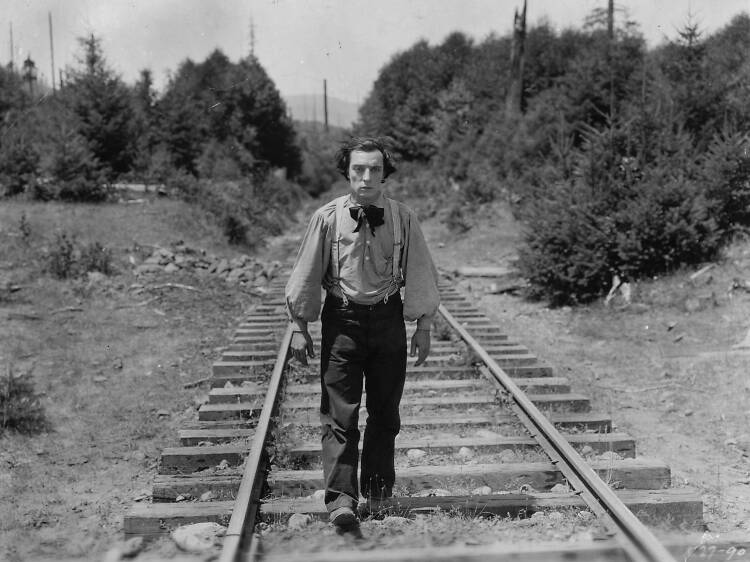
66. The General (1926)
Male child meets train. Boy loses train. Boy chases Union forces who stole train, wins back train and fires off in the opposite direction. Information technology may not audio like your average honey story, merely that's exactly what Buster Keaton'south deadpan and death-defying silent comedy is: a majestic demonstration of trick photography, balletic courage and comic timing, all underpinned by 18-carat eye. Trust u.s., it'south loco-motional.—Phil de Semlyen

67. Eternal Sunshine of the Spotless Mind (2004)
There are countless movies well-nigh romantic relationships, yet few explore the subject more creatively than Michel Gondry'southward quantum, scripted past Charlie Kaufman (who was then becoming a household name with Beingness John Malkovich and Adaptation). The sci-fi–inflected tale of 2 halves of a cleaved-up couple going through a memory-erasing procedure takes many surprising, poignant turns; the pic'due south impeccably executed combination of authentically quirky imagery and philosophical inquiry has become a signpost of modern independent cinema.—Abbey Bender

68. The Texas Concatenation Saw Massacre (1974)
The title is notwithstanding a killer piece of marketing, suggesting something much gorier than what you become. That's not to say Tobe Hooper's masterpiece doesn't deliver. A grungy vision of horror captured during a palpably sweaty and stenchy Texas summer, the movie has taken its rightful identify equally a definitive parable of Nixonian class warfare, consume-or-be-eaten social envy and the substantially unknowable nature of some unlucky parts of the world.—Joshua Rothkopf

69. Come and See (1985)
As unsparing as cinema gets, the influence of Elem Klimov's sui generis war film transcends the genre in a style that not even Steven Spielberg's Saving Private Ryan can match. At its eye it's a coming-of-age story that follows a young Belarusian boy (Aleksei Kravchenko) through unspeakable horror as Nazi death squads visit an apocalypse on his region. Alongside its historical truths, the picture'southward grammar and visual language—at that place are passages that play similar an ultra-tearing acid trip—are what truly elevates it. Like an Hieronymus Bosch masterpiece, the images here tin never exist unseen.—Phil de Semlyen

70. Heat (1995)
Writer-manager Michael Isle of man'south heist masterpiece put 2 of our greatest actors, Robert De Niro and Al Pacino, together onscreen for the showtime time—ane as a stoic master criminal, the other as the obsessive cop determined to bring him downward. In weaving their stories together, Isle of mann presents dueling only equally weighted perspectives, with our allegiance as viewers constantly shifting. The concluding word on cops-and-robbers movies, it'southward suffused with a magic that crime thrillers try to recapture to this day.—Bilge Ebiri
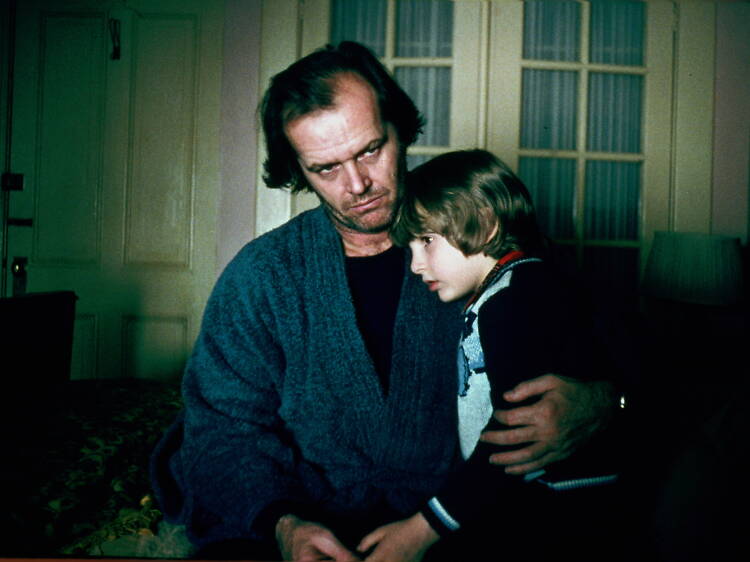
71. The Shining (1980)
Our list doesn't lack for Stanley Kubrick movies (nor should it). Still, it's shocking to think that The Shining—so redolent of the manager's pet themes of mazelike obsession and the banality of evil—was once considered a minor piece of work. It'south since come up to represent the nigh concentrated nail of Kubrick'southward total command; he's the god of the film, Steadicam-ing around corners and making the audition find that he was born to redefine horror. Fifty-fifty if we can't curlicue with the crackpot fan theories about how Kubrick allegedly faked the Apollo moon landing, we'll readily admit that this picture contains cosmic multitudes.—Joshua Rothkopf

72. Toy Story (1995)
The one that got Pixar'due south (Luxo) ball rolling and still an accented high-water mark for CG animation, Toy Story reinvented what a family moving-picture show could be. On the surface, it's a uncomplicated story near a couple of miniature rivals sizing each other up (Woody was originally going to be a whole mess meaner), before falling into peril at the hands of adjacent-door pyrotechnics genius Sid. Only it's also about jealousy, ability dynamics and our relationships with our own childhoods. With information technology, Pixar took storytelling to infinity and far, far across.—Phil de Semlyen
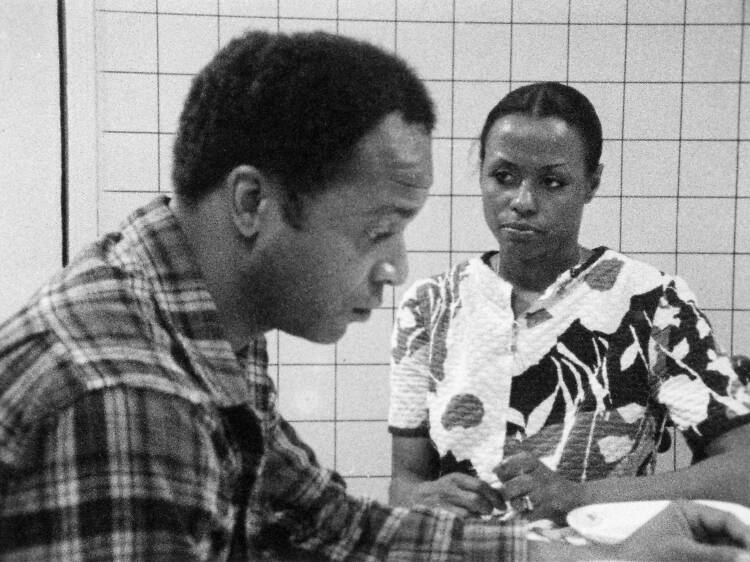
73. Killer of Sheep (1977)
Shot on 16-millimeter flick in sketchy light, Charles Burnett'due south UCLA graduate thesis film stitches together seemingly mundane vignettes to form a compelling mosaic of late-'70s African-American life. A landmark of contained black cinema, information technology's set to a great soundtrack ranging from blues and classical to Paul Robeson. Poetic, compassionate, angry, ironic: All human life is present here.—Ian Freer

74. A Woman Under the Influence (1974)
There'southward a tendency in these greatest-of-all-fourth dimension exercises to prioritize the director, the camerawork or the screenplay. But respect must exist paid to the performer, too: In a decade of bright acting, no plow was quite as galvanizing as the one given by Gena Rowlands in this stunning peek into a fraying heed. A fluky Los Angeles housewife and mother who'south constantly being told to at-home down, Rowlands's Mabel is the apotheosis of John Cassavetes'southward improvisatory movie theater; our concern for her never flags as she teeters through excruciating scenes of breakup and regrouping.—Joshua Rothkopf
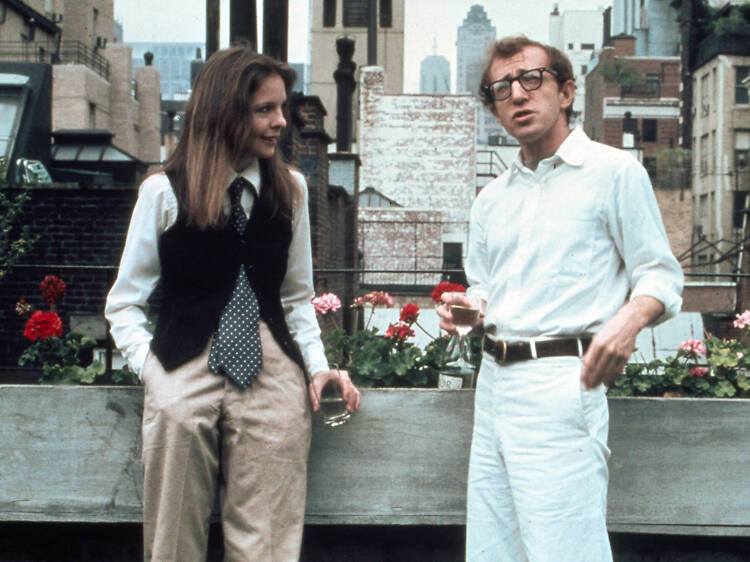
75. Annie Hall (1977)
Quotable, endearing and bursting with creative moments, Annie Hall is one of the about revolutionary of romantic comedies. This quintessential New York motion picture turned countless viewers on to the joys of verbose dialogue (and experimentation in menswear for women), and has long been lauded for both its accessibility and its poignancy, a residue that few movies have since achieved so memorably.—Abbey Bender

76. Some Like It Hot (1959)
Clocking it at number xv on our listing of the 100 Greatest Comedies Ever Made , Baton Wilder's classic gangster farce plays like Scarface on helium. Tony Curtis and Jack Lemmon make one of cinema's almost delightful double acts as a couple of musicians on the run from the Mob, but Marilyn Monroe steals the motion-picture show as the coquettish, breathy and entirely loveable Sugar. Nobody's perfect merely this movie gets pretty darn close.—Phil de Semlyen
77. Metropolis (1927)
Hugely expensive for its time, Metropolis is Bract Runner, The Terminator and Star Wars all rolled into ane (not to mention 50 years prior). Fritz Lang'southward silent vision of a totalitarian lodge notwithstanding astounds through its stunning cityscapes, groundbreaking special effects and a bewitchingly evil robot (Brigitte Helm). It's scientific discipline fiction at its nigh ambitious and breathtaking—the non-and then-minor ancestry of onscreen genre seriousness.—Ian Freer
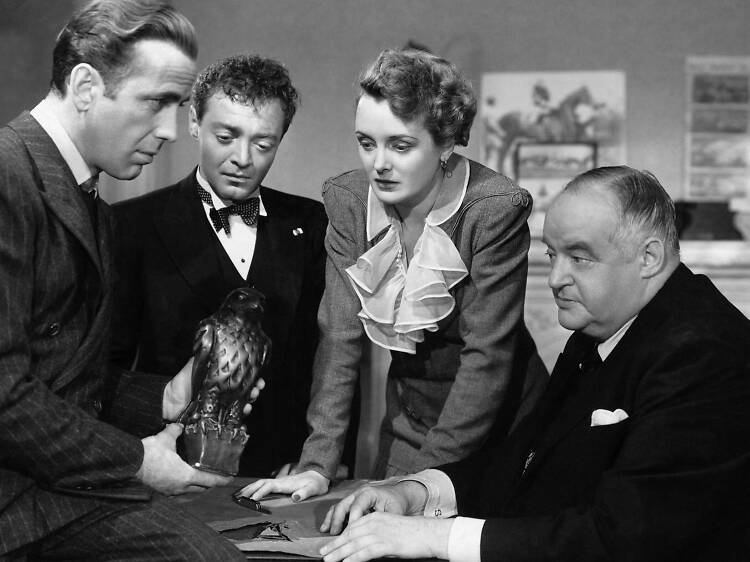
78. The Maltese Falcon (1941)
The accustomed wisdom is that the noir era really kicked off during the difficult-bitten post-WWII years, which makes John Huston'southward adaptation of Dashiell Hammett's detective novel a existent trailblazer. It'southward a template for the swathe of noir flicks that would follow, offering upwards a jaded-merely-noble gumshoe in Humphrey Bogart'southward Sam Spade, a femme fatale (Mary Astor), a couple of shifty villains (Sydney Greenstreet, Peter Lorre) and a labyrinthine plot that drags y'all effectually by the nose. If the picture were any more hard-boiled, you'd crack your teeth on information technology.—Phil de Semlyen
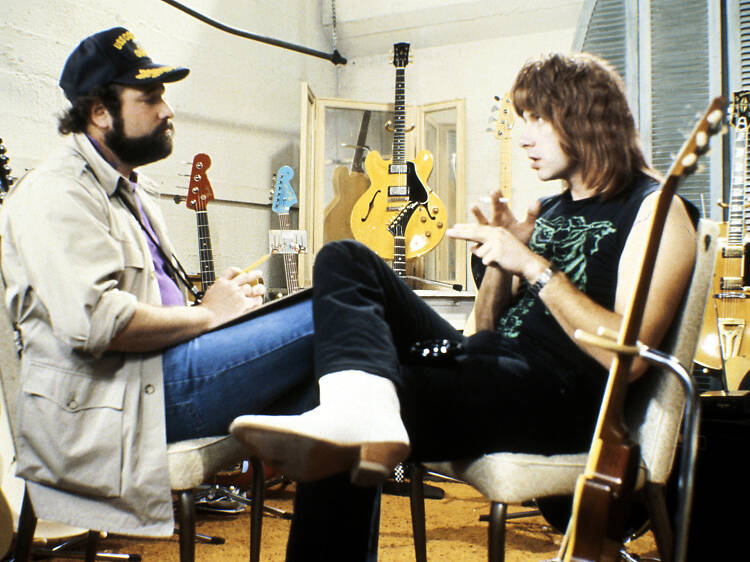
79. This Is Spinal Tap (1984)
Exploding drummers, amps that go to 11, tiny Stonehenges, "Dobly": This spoof rock documentary—rockumentary, if you lot must—is monumentally influential on cinema, blench comedy and, possibly, the music industry itself. (There'due south not a band out in that location without at to the lowest degree one Spinal Tap moment to its name.) Christopher Invitee, Michael McKean and Harry Shearer are comic royalty, and we can only genuflect in their presence; shortly afterwards this film, Guest kicked off his ain directorial brand of humor, directly inspired by Rob Reiner's heavy-metal satire.—Phil de Semlyen

fourscore. Information technology Happened One Dark (1934)
If only Hollywood made 'em like they used to: crackling romantic comedies that conquered the Oscars. Frank Capra's hilarious detest-at-offset-sight beloved story is still one of the fastest movies ever made. Claudette Colbert's spoiled heiress and Clark Gable's opportunistic reporter hit the road and bicker their way toward a happily-always-afterward ending, class barriers be damned. Non only did this smart and suggestively sexy pre-Code screwball shape every rom-com that followed, information technology still has a leg upwards on most of them.—Tomris Laffly
81. Die Hard (1988)
The perfect action picture? It'due south hard to think of one better than this belfry-block spectacular—nor i more imitated. In that location's since been "Die Difficult on a boat" (Nether Siege), "Die Difficult in a hockey arena" (Sudden Death) and even "Die Hard in a private school" (1997'south Masterminds). None, though, is fit to necktie the laces on John McClane's chop-chop discarded shoes. The stunts are awesome, the dialogue is endlessly quotable, and Bruce Willis and Alan Rickman are a white-hat–blackness-chapeau duo straight out of a archetype Western.—Phil de Semlyen

82. The Conformist (1970)
In Mussolini'south Italy, a repressed homosexual (Jean-Louis Trintignant) joins the Fascist political party in club to blend in and hide his truthful cocky. Role psychoanalysis session, part colorful genre fantasia, director Bernardo Bertolucci'due south enormously influential drama journeys through different styles and aesthetics. As much every bit Orson Welles's Citizen Kane did with the films of the '20s, '30s, and early '40s, The Conformist offers a powerful compendium of cinematic techniques from the eras preceding information technology.—Bilge Ebiri

83. The Thing (1982)
Let John Carpenter's real masterpiece—the one that horror mavens bow down to—have its place in the pantheon. A passion projection that got clobbered by audiences and critics akin, The Thing was, in fact, that rarest of remakes: one that improves upon its source. Carpenter'southward widescreen elegance and chilling synth minimalism (here furthered by composer Ennio Morricone) found a new counterpoint in some of the most icky practical special effects ever sprung on a paying audience. But the film'due south ice-cold paranoia, uncut and pharma-grade, has been its most lasting legacy: a template of perfection for all since.—Joshua Rothkopf

84. Daughters of the Dust (1991)
Writer-director Julie Nuance should have become an Ava DuVernay-level success after her poetic characteristic debut, an achievement of otherworldly beauty. The outset picture show fabricated by an African-American woman to receive theatrical distribution, Daughters of the Grit is permeated with pride, history and matriarchal wisdom. Set in 1902, it follows the Gullah, descendents of slaves living off the coast of South Carolina, who painfully reckon with their fading traditions. Singularly ahead of its fourth dimension, Daughters mourns the enduring tragedy of enslavement. Its tranquil strength afterward found an repeat in Beyoncé's Lemonade.—Tomris Laffly

85. Barry Lyndon (1975)
Back in 1975, Stanley Kubrick'southward somber accommodation of William Makepeace Thackeray's novel about a young Irishman's journeying from lovestruck exile to cynical grifter in 18th-century Europe seemed out of pace with the gritty, intense output of contemporary cinema. Years afterward, it's considered by many to be Kubrick's masterpiece, and its deliberate, highly aestheticized approach has influenced everybody from Ridley Scott to Yorgos Lanthimos.—Bilge Ebiri
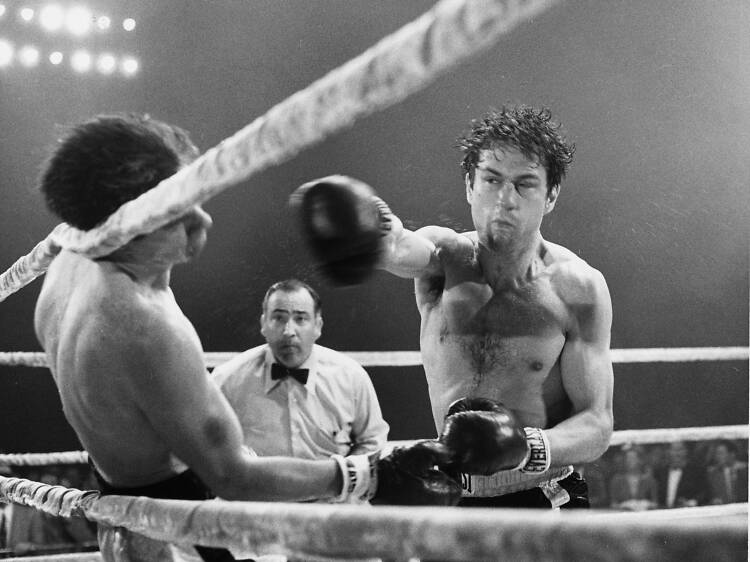
86. Raging Balderdash (1980)
Martin Scorsese's hallucinogenic biography of the tenacious boxer Jake LaMotta (Robert De Niro) is a bold mash-up of neorealist dust and hyperstylized, gossamer beauty. Put on the gloves and LaMotta is in his chemical element; take them off and he'south an insecure sociopath consumed past sexual jealousy. De Niro's monstrous portrayal is miraculously empathetic, only what'due south truly revolutionary is Scorsese'due south technique: Like a modern-day Verdi, the Italian-American auteur elevates the profane to the operatic.—Stephen Garrett

87. 7 (1995)
David Fincher is the most signature manager of his era: a crafter of iconic music videos and decade-defining dramas like Zodiac and The Social Network. Only his transition to Hollywood was rocky; it was a town that barely understood him. The turning indicate was Seven, the first time that Fincher'due south fearsome vision arrived uncut. Stylistically, the dark movie (shot past an inspired Darius Khondji, working with a silver-nitrate-retention procedure) has proven more durable than fifty-fifty The Silence of the Lambs, but it's that meme-able sucker dial of an ending that still rattles audiences.—Joshua Rothkopf

88. Aguirre, the Wrath of God (1972)
E'er-overshadowed by the Herculean feat that was Fitzcarraldo, Werner Herzog'southward other exploration of male vainglory in the remotest parts of S America applies another coolly obversational lens to the cancerous madness of out-of-control obsession. It's colder, greedier here: Klaus Kinski'southward conquistador craves aureate, not culture. Featuring a river journey, a haunting, synthy Popul Voh score and a bunch of taunting monkeys, information technology'southward Herzog's Apocalypse At present.—Phil de Semlyen

89. The Battle of Algiers (1966)
Political thrillers notwithstanding owe a debt to Gillo Pontecorvo's ever-timely tour de force. Recounting the Algerian uprising confronting French colonial occupiers in the 1950s, The Battle of Algiers boldly examines terrorism, racism and fifty-fifty torture every bit a ways of intelligence-gathering. Screened at the Pentagon for its topical significance during the early phases of the Iraq War, Algiers has its rebellious legacy vested in numerous politically charged epics, from Z to Steven Spielberg'due south Munich.—Tomris Laffly

ninety. Women on the Verge of a Nervous Breakdown (1988)
Pedro Almodóvar broke into the mainstream with this gloriously colorful ensemble one-act, an entry point for many into a style of smart, sexually liberated European cinema. Women on the Verge of a Nervous Breakdown offers juicy roles for a range of Spain's finest female actors (plus a charmingly baby-faced Antonio Banderas) and consistently delights with its creative choices in costuming and interior design. The combination of screwball dynamics and the garishness of the 1980s is perfectly calibrated and fun.—Abbey Bender

91. Boyhood (2014)
Shot over 12 years with a cast of actors that ages before our optics, Richard Linklater'due south modern-mean solar day coming-of-age classic is a peerless creative hazard, comparable only to Michael Apted's Up series and Francois Truffaut's Antoine Doinel films. Still, Adolescence'due south astonishing compactness catches you off guard like no other movie. Adorned past Linklater'south signature effortless rhythms, the moving-picture show bottles the fleeting spirit of fourth dimension, maturing into a cogitating meditation on life's ordinary moments.—Tomris Laffly
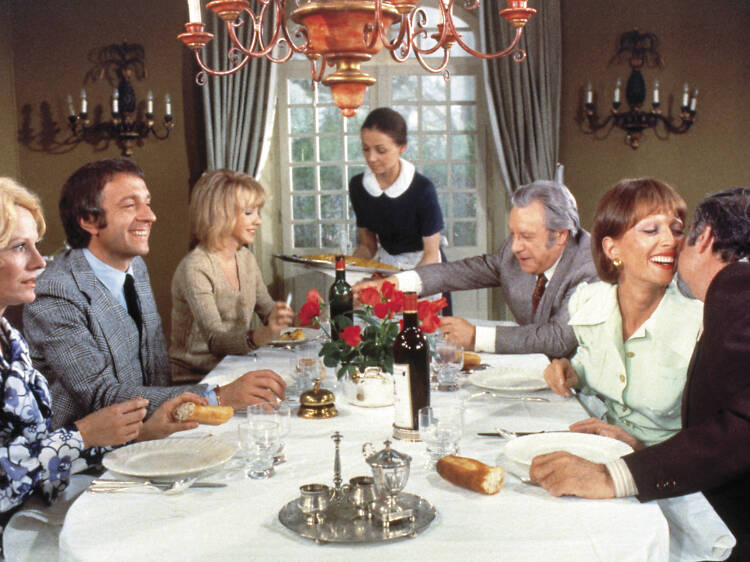
92. The Unimposing Charm of the Bourgeoisie (1972)
Movies have e'er been a gateway into radical art; Hollywood may have made them sleek and accessible, but experimentation was there from the start. Luis Buñuel counts among the top rank of dreamers to ever grace the field of filmmaking. Without him, there's no David Lynch, no Wong Kar-wai—even Alfred Hitchcock was a fan. Of Buñuel'south many seismic features (don't skip his slicin'-upwardly-eyeballs short, "United nations Chien Andalou"), brainstorm with this radical satire of class warfare, which sums upwards everything he did well. It fifty-fifty won him an unlikely Oscar.—Joshua Rothkopf
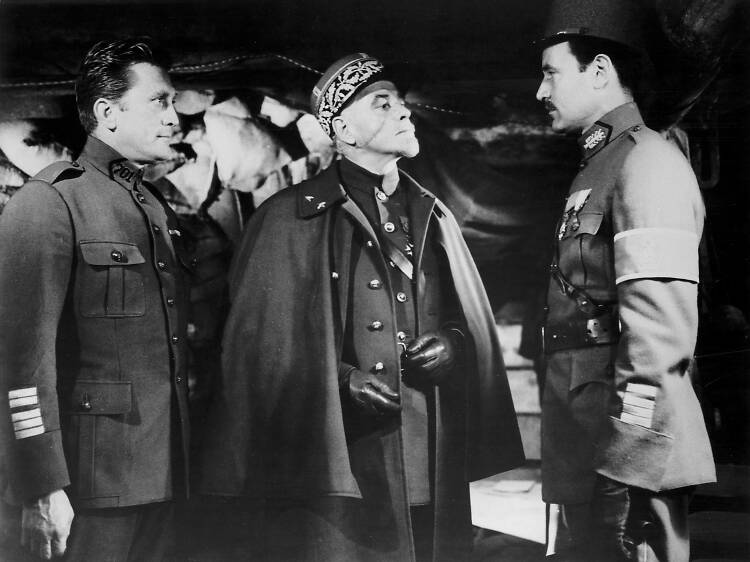
93. Paths of Glory (1957)
An antiwar pic, a courtroom thriller, an upstairs-downstairs written report of social status, a religious critique, an absurdist satire and, finally, a heartbreakingly futile plea for compassion in the face of devastation, Stanley Kubrick's humanist masterpiece dissects all the delusional facets of the male psyche. Battlegrounds abound—psychological, emotional, physical—making the bleakly entrenched soldiers of 1916, and the officers who confuse folly for fame, withal experience painfully relevant.—Stephen Garrett

94. Secrets & Lies (1996)
Actors are the lifeblood of manager Mike Leigh's famous procedure, a much-discussed method of workshopping, graphic symbol exploration, grouping improvisation and collaborative writing. It can often be months earlier the camera rolls. The results have been consistently exquisite over the years, funneled into period musical-comedies (Topsy-Turvy) and cruel contemporary dramas (Naked) alike. We recommend Leigh's critical breakthrough, featuring nervy turns by Brenda Blethyn and Timothy Spall, every bit the perfect place to begin your deep dive.—Joshua Rothkopf

95. Sweetness Scent of Success (1957)
This smoky, jazzy noir from managing director Alexander Mackendrick (The Ladykillers) is one of the not bad movies about power, influence and print journalism at its midcentury acme. It's a seedy, intoxicating tale that unfolds in Manhattan's backroom bar booths, and it features brain-searing performances from Tony Curtis every bit Sidney Falco, a bottom-feeding gossip monger, and Burt Lancaster as J.J. Hunsecker, a towering, corrupt newspaper columnist. The dialogue is snappy and delicious; the morals are as empty as Times Square at dawn—Dave Calhoun
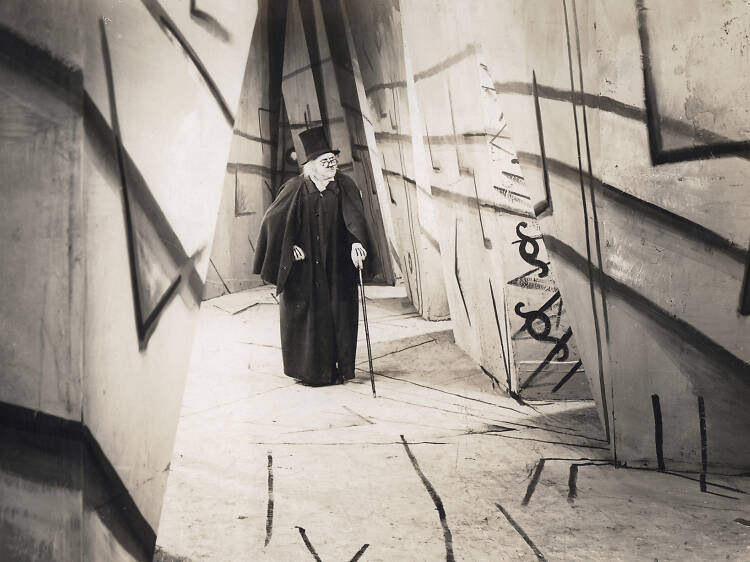
96. The Cabinet of Dr. Caligari (1920)
This German language Expressionist masterpiece came out in 1920, a long time before the invention of the spoiler alarm. We only hope that audience members instinctively knew non to requite away cinema'southward first ever twist ending and ruin the sting of this fractured horror-fable for their pals. Director Robert Wiene conjured upward something truly nighttime and lingering from its shadows: You can feel Dr. Caligari's influence in everything from Tim Burton'due south movies to Shutter Island.—Phil de Semlyen

97. Nashville (1975)
This multilayered epic of state music, politics and relationships is Robert Altman'southward signature accomplishment. With its overlapping dialogue and roving photographic camera, Nashville created an earthy, idiosyncratic panorama of American life, featuring many of the most memorable actors of the decade. The 1970s were U.South. cinema's most heady period, and Nashville—broadened by its admirable scope and freewheeling energy—is emblematic of that creativity.—Abbey Bender

98. Don't Look Now (1973)
Nicolas Roeg influenced and inspired a generation of filmmakers, from Danny Boyle to Steven Soderbergh – and here's why. Roeg shrouds Daphne du Maurier's short story in an icy arctic, seeding the idea of supernatural forces at play in a wintry Venice through sheer filmmaking craft and the ability of his editing. He finds a deep humanity in the horror, too, with Julie Christie and Donald Sutherland's grieving parents reconnecting and globe-trotting apart like flotsam on some invisible tide. His masterpiece, Don't Look Now remains a primal cry of grief that shakes you lot to the core.—Phil de Semlyen

99. Bonnie and Clyde (1967)
Arthur Penn's game-changing activity picture was fabricated in the aforementioned spirit of the revisionist Westerns of the '60s and '70s—irreverent, fun, morally all over the place, and unafraid of blood and bullets. The flick takes us back to the 1930s during the legendary crime spree of lovers Bonnie Parker (Faye Dunaway) and Clyde Barrow (Warren Beatty), careening around Depression-era America and robbing it blind. Why did this moving picture resonate so well at the end of its decade? With the Vietnam War, inner-city rioting and Nixon on the ascension, all bets were off. Add the swoony pair of Beatty and Dunaway, and you've got a classic on your hands: a revolution in period dress.—Dave Calhoun
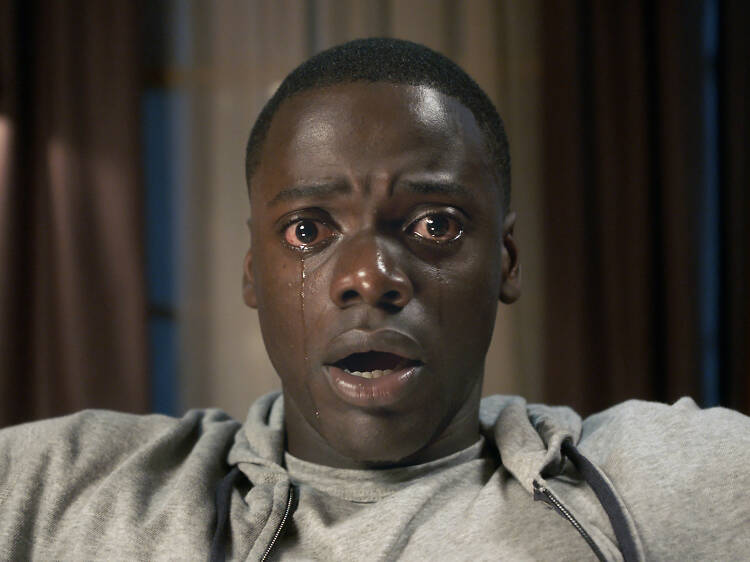
100. Get Out (2017)
Watch this space: Hashemite kingdom of jordan Peele'southward newly minted horror archetype is sure to ascension in the rankings. Taking cues from grand chief George A. Romero and his counterculture-defining Night of the Living Dead, Peele infused white liberal guilt with a scary racial subtext; the "sunken identify" is precisely the kind of metaphor that only horror movies can exploit to the fullest. During its theatrical run—which stretched into a summertime that also saw the white-supremacist Charlottesville rally—Exit felt like the simply picture speaking to a deepening carve up.—Joshua Rothkopf
Want to know your favorite player'southward favorite movie?
An email you'll actually dearest
🙌 Crawly, you're subscribed!
Thanks for subscribing! Look out for your first newsletter in your inbox presently!
DOWNLOAD HERE
Posted by: hutchisonhisidle.blogspot.com